
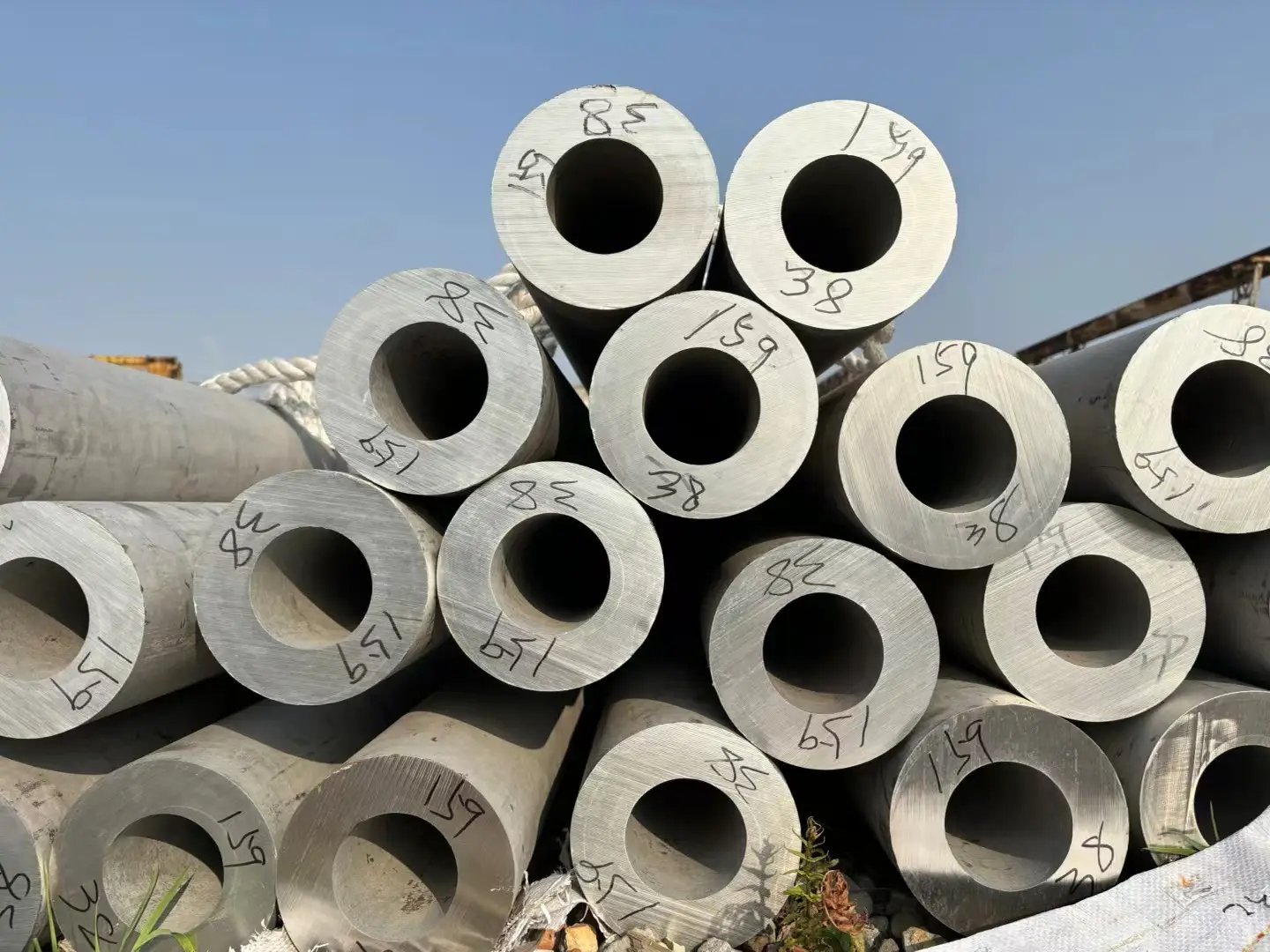
The Foundational Metallurgy of Duplex Stainless Steels: An Architecture of Synergy
The journey to understanding the extraordinary performance of Duplex Stainless Steels (DSS) begins deep within the material’s microscopic structure, an elegant and carefully balanced architecture of two distinct metallic phases: ferrite ($\alpha$) and austenite ($\gamma$). This unique two-phase configuration is not a random occurrence but the culmination of precise alloying decisions, primarily revolving around the careful balance of chromium ($\text{Cr}$), nickel ($\text{Ni}$), molybdenum ($\text{Mo}$), and the critical inclusion of nitrogen ($\text{N}$). This metallurgical duality provides a composite material that simultaneously leverages the best attributes of both traditional stainless steel families—the high strength and stress-corrosion cracking (SCC) resistance inherent in ferritic stainless steels, coupled with the exceptional toughness and general corrosion resistance characteristic of austenitic stainless steels.
The nominal ideal microstructure aimed for in most commercial DSS, particularly in the three grades under discussion (S31803, S32205, S32750), hovers around a $50 \pm 10$ percent distribution of each phase. This $50/50$ balance is the crucible where their superior properties are forged. The ferritic phase, being body-centered cubic ($\text{BCC}$), contributes significantly to the material’s high yield strength, often double that of common austenitic grades like $\text{316L}$, and crucially, it imparts the resistance to chloride-induced SCC that plagued earlier generations of stainless materials in aggressive media. Conversely, the austenitic phase, which has a face-centered cubic ($\text{FCC}$) structure, is responsible for the steel’s impressive ductility, fracture toughness, and overall resistance to general and pitting corrosion. The mere coexistence of these two phases, however, is insufficient; their beneficial relationship relies on the precise chemical control codified within standards like ASTM A789, a control that governs both the phase balance and the specific corrosion fighting capabilities imbued by the alloying elements.
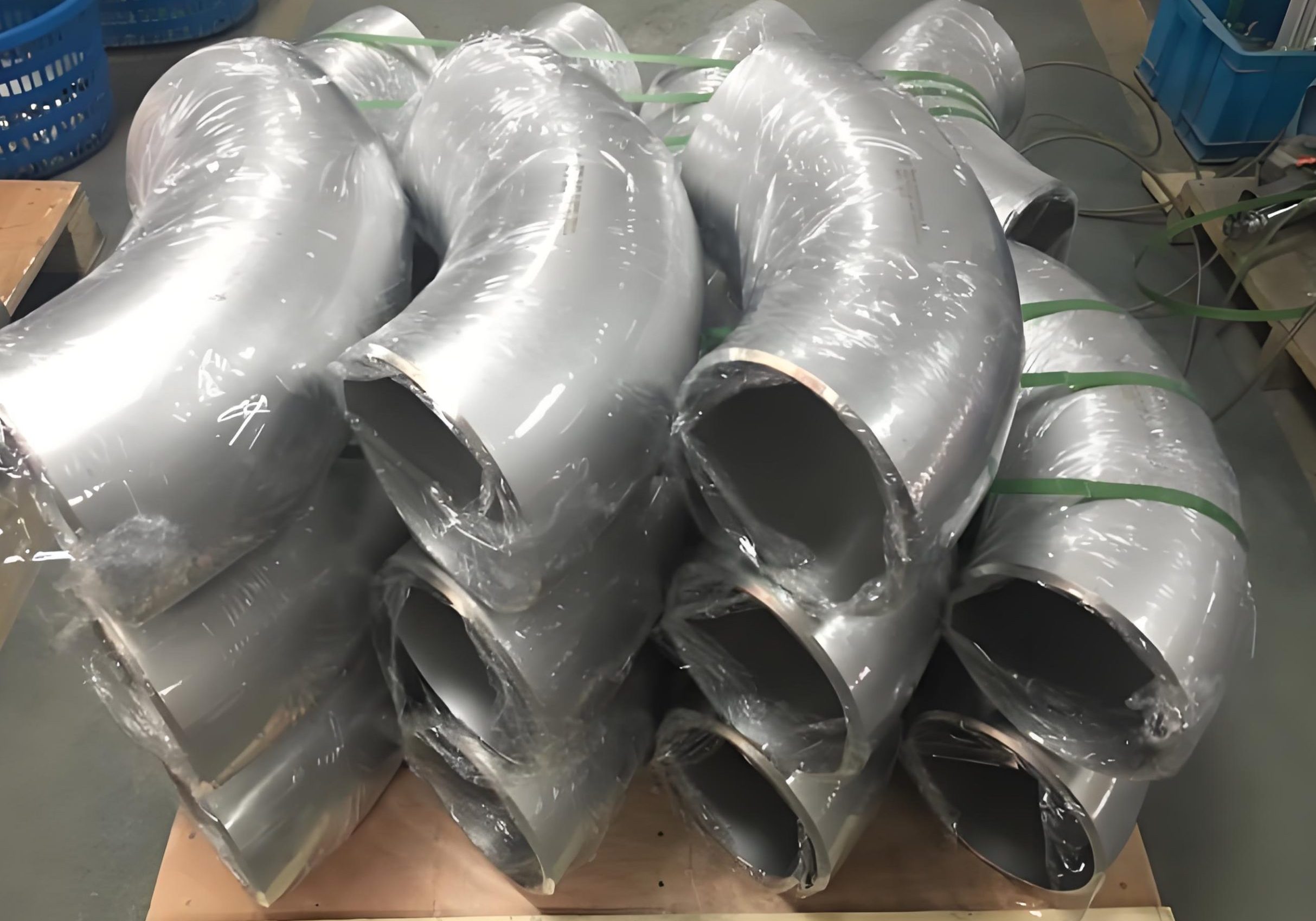
The major alloying constituents are the architects of this duplex structure. Chromium ($\text{Cr}$) is the foundational element for all stainless steels, providing corrosion resistance by forming a tenacious, self-healing passive oxide layer on the surface, and it acts as a ferrite stabilizer. High $\text{Cr}$ content (typically $22\%$ to $25\%$ in these grades) is essential for maximizing both strength and corrosion resistance. Nickel ($\text{Ni}$), in contrast, is the primary austenite stabilizer, required to pull a sufficient amount of the material into the $\text{FCC}$ phase at room temperature, thus ensuring the crucial ductility and toughness. Molybdenum ($\text{Mo}$) is the powerhouse for localized corrosion resistance, particularly against pitting and crevice corrosion in chloride environments. Its partitioning to the ferrite phase further enriches that phase, bolstering its resistance. Finally, and perhaps most critically in the evolution of modern DSS, is Nitrogen ($\text{N}$). Nitrogen acts as a powerful austenite stabilizer, similar to nickel, but its true genius lies in its dual function: it significantly increases the yield strength via solid solution strengthening, and, by retarding the formation of deleterious intermetallic phases (like the brittle and corrosion-vulnerable $\text{Sigma}$ phase) during high-temperature processing and welding, it enhances weldability and thermal stability, all while concentrating in the austenite phase and thereby greatly improving its pitting resistance. The concentration of $\text{N}$ in the $\text{Cr}$/$\text{Mo}$ enriched austenite phase is a key factor that differentiates the performance of these modern alloys.
Table I: Chemical Composition Requirements (ASTM A789/A789M – $\text{S31803, S32205, S32750}$)
The precise control of these elemental percentages defines the material and its potential for service. The following table, strictly governed by the ASTM A789 standard for seamless and welded pipe, details the compositional limits that must be met to ensure the desired duplex properties, providing the foundation for their classification from standard to super duplex.
| Element | UNS S31803 (Standard) | UNS S32205 (Improved/Standard) | UNS S32750 (Super Duplex) |
| Carbon ($\text{C}$), max | $0.030$ | $0.030$ | $0.030$ |
| Manganese ($\text{Mn}$), max | $2.00$ | $2.00$ | $1.20$ |
| Phosphorus ($\text{P}$), max | $0.030$ | $0.030$ | $0.035$ |
| Sulfur ($\text{S}$), max | $0.020$ | $0.020$ | $0.010$ |
| Silicon ($\text{Si}$), max | $1.00$ | $1.00$ | $0.80$ |
| Chromium ($\text{Cr}$) | $21.0-23.0$ | $22.0-23.0$ | $24.0-26.0$ |
| Nickel ($\text{Ni}$) | $4.5-6.5$ | $4.5-6.5$ | $6.0-8.0$ |
| Molybdenum ($\text{Mo}$) | $2.5-3.5$ | $3.0-3.5$ | $3.0-5.0$ |
| Nitrogen ($\text{N}$) | $0.08-0.20$ | $0.14-0.20$ | $0.24-0.32$ |
| Copper ($\text{Cu}$), max | $0.50$ | $0.60$ | $0.50$ |
| Tungsten ($\text{W}$), max | – | – | $1.00$ |
The subtle yet profound differences in the maximum and minimum percentages shown above define the functional categories of these grades. The transition from S31803 to the contemporary S32205 (which is often supplied as the default 2205 grade today, benefiting from tighter $\text{Cr}$ and $\text{N}$ control) represents an optimization—a slight but critical boost in the minimum $\text{Mo}$ and $\text{N}$ content, solidifying its position. The leap to S32750 (Super Duplex), however, is dramatic, marked by the elevation of $\text{Cr}$ to a minimum of $24.0\%$ and $\text{N}$ to $0.24\%$, accompanied by a $\text{Mo}$ ceiling of $5.0\%$ and the optional addition of $\text{W}$. This concerted enrichment drastically increases the Pitting Resistance Equivalent Number ($\text{PREN}$), which is the industry’s crucial yardstick for predicting resistance to localized corrosion in chloride environments, elevating S32750 into the high-performance super duplex category, suitable for the most hostile environments encountered in offshore oil and gas production, chemical processing, and desalination plants. This progression in chemistry is a direct response to the escalating demands of industrial processes, where standard duplex steels simply do not offer the required margin of safety against catastrophic failure.
The Evolution of Corrosion Resistance: From Standard to Super Duplex and the PREN Metric
The primary value proposition of duplex stainless steels is their superior corrosion resistance relative to the common austenitic grades, particularly their exceptional tolerance to highly acidic or chloride-laden environments. This resistance is fundamentally tied to the careful manipulation of the three key corrosion-fighting elements: $\text{Cr}$, $\text{Mo}$, and $\text{N}$. The industry standard for quantifying and predicting the performance of an alloy in such conditions is the Pitting Resistance Equivalent Number ($\text{PREN}$). This empirical relationship serves as a powerful predictive tool, calculated by the following equation:
The coefficients in this formula dramatically illustrate the power of the alloying elements: Molybdenum is $3.3$ times more effective than Chromium, and Nitrogen is an astonishing $16$ times more potent. The high factor for Nitrogen underscores its pivotal role, not just for strength and microstructural stability, but also for its ability to retard the anodic dissolution reaction within a localized corrosion pit, thereby raising the critical pitting temperature ($\text{CPT}$) and critical crevice corrosion temperature ($\text{CCT}$).
Analyzing the three grades using typical compositional ranges highlights their progressive resistance:
-
UNS S31803 (Standard Duplex): Typical $\text{PREN}$ value is in the range of $\sim 32$ to $34$. This is a significant improvement over the $316\text{L}$ austenitic grade ($\text{PREN} \sim 25$) and makes it suitable for many general-purpose applications where moderate chloride content is present, such as some parts of wastewater treatment or pulp and paper industries.
-
UNS S32205 (Improved Duplex): By virtue of the tighter and higher minimums for $\text{Mo}$ and $\text{N}$, S32205 consistently achieves a $\text{PREN}$ of $\sim 35$ to $38$. This marginal, yet highly valuable, increase provides a greater margin of safety, particularly in environments where temperatures fluctuate or unexpected chloride excursions occur, leading to its effective standardization as the benchmark $22\text{Cr}$ duplex grade.
-
UNS S32750 (Super Duplex): This grade is engineered for the most aggressive environments, boasting a minimum $\text{PREN}$ of $\sim 40$ and often achieving $\sim 43$. This high $\text{PREN}$ is essential for handling extremely high chloride concentrations, elevated temperatures, and low $\text{pH}$ conditions typical of highly sour service ($\text{H}_2\text{S}$), deep subsea service, and the hot sections of multi-stage flash $(\text{MSF})$ desalination plants.
Beyond pitting and crevice corrosion, the duplex structure itself provides inherent resistance to Stress Corrosion Cracking (SCC), a common failure mode for standard austenitic grades when exposed to hot, oxygenated chloride solutions. The ferritic phase, which is less susceptible to SCC, acts as a crack arrestor. A crack initiating in the austenitic phase tends to deflect or slow down upon hitting the boundary of the tougher, $\text{SCC}$-resistant ferritic grain, effectively dampening the crack propagation rate. This unique crack-arresting mechanism is one of the most compelling reasons for the adoption of DSS pipes in applications involving long-term exposure to hot brine and other aggressive chemical process streams, where the failure of a containment system could lead to catastrophic environmental or operational consequences. The ability to specify a material that combines exceptional pitting resistance (due to $\text{Cr}/\text{Mo}/\text{N}$) with high $\text{SCC}$ resistance (due to the duplex microstructure) fundamentally changes the design envelope for high-pressure, high-temperature fluid transport systems.
Mechanical Integrity and the Mandate of Heat Treatment: Restoring the Balance
The high strength of DSS, especially compared to their austenitic cousins, is a critical operational advantage, allowing for the design of thinner-walled pipes and tubes, leading to weight and cost savings in complex structures like offshore risers and topside platforms. This strength originates primarily from the hard ferritic phase, which is further bolstered by the solid solution strengthening effect of nitrogen in both phases.
The mechanical properties are inextricably linked to the heat treatment process, which is perhaps the single most critical step in the entire manufacturing chain for these duplex grades. All pipes conforming to ASTM A789, whether seamless or welded, must undergo a solution annealing and quenching procedure. This is not optional; it is a metallurgically essential step to ensure the integrity of the final product and is a primary requirement codified in the standard.
The Necessity of Solution Annealing
During the initial stages of pipe production, whether by hot extrusion and rolling (seamless) or by welding and subsequent forming (welded), the material is exposed to elevated temperatures and often subjected to rapid cooling or cold work. These thermal cycles can lead to the precipitation of undesirable, detrimental intermetallic phases, most notably the $\text{Sigma}$ ($\sigma$) phase and $\chi$ (Chi) phase, but also secondary austenite or various nitrides and carbides. The $\text{Sigma}$ phase, which typically precipitates in the temperature range of approximately $650^\circ\text{C}$ to $950^\circ\text{C}$, is a complex, brittle, $\text{Cr}$– and $\text{Mo}$-rich phase that forms preferentially at the ferrite-austenite phase boundaries.
The consequences of $\text{Sigma}$ phase formation are dire:
-
Embrittlement: It drastically reduces the material’s fracture toughness and ductility, particularly at room temperature, leading to catastrophic brittle failure under impact or stress.
-
Corrosion Degradation: By consuming large amounts of $\text{Cr}$ and $\text{Mo}$ from the surrounding ferrite and austenite matrixes to form the precipitate, it depletes the base material of the very elements required for corrosion resistance. This results in localized zones of low $\text{PREN}$, making the pipe highly susceptible to intergranular, pitting, or crevice corrosion, often leading to premature failure in service.
The primary purpose of solution annealing is to reheat the material to a sufficiently high temperature—the solution annealing temperature—to ensure that all these deleterious phases are fully dissolved back into the primary ferrite and austenite matrixes. The subsequent mandatory rapid water quench is equally crucial, as its purpose is to “freeze in” this optimized, $50/50$ duplex microstructure and prevent the detrimental phases from re-precipitating as the material cools through the critical $\text{Sigma}$ formation range. The precise temperature is grade-dependent, reflecting the differing levels of alloying elements, and is strictly defined in ASTM A789.
Table II: Heat Treatment Requirements (ASTM A789/A789M)
The following specifies the minimum solution heat-treatment temperatures, which must be followed by rapid cooling (quenching) to prevent the formation of deleterious phases.
| UNS Designation | Required Solution Annealing Temperature (Minimum) |
| S31803 | $1870^\circ\text{F}$ ($1020^\circ\text{C}$) |
| S32205 | $1870^\circ\text{F}$ ($1020^\circ\text{C}$) |
| S32750 | $1920^\circ\text{F}$ ($1050^\circ\text{C}$) |
The higher temperature requirement for S32750 (Super Duplex) is a direct consequence of its higher $\text{Cr}$ and $\text{Mo}$ content. These elements raise the necessary temperature required to fully dissolve the more tenacious intermetallic phases that are prone to forming in the highly alloyed Super Duplex matrix. Failure to meet or exceed these minimum temperatures, or insufficient quenching speed, invalidates the pipe for critical service and constitutes a material defect under the ASTM A789 standard.
Table III: Tensile Requirements (ASTM A789/A789M)
Successful solution annealing and quenching result in a pipe with the required mechanical properties. The following tensile requirements are tested perpendicular to the axis of the pipe (for seamless) or parallel to the axis (for welded) and demonstrate the high strength achieved by the duplex microstructure.
| UNS Designation | Yield Strength (0.2% Offset) Min, ksi (MPa) | Tensile Strength Min, ksi (MPa) | Elongation in 2 in or 50 mm, Min, % |
| S31803 | $65$ ($450$) | $90$ ($620$) | $25$ |
| S32205 | $65$ ($450$) | $90$ ($620$) | $25$ |
| S32750 | $80$ ($550$) | $116$ ($800$) | $15$ |
The tensile data clearly show the performance leap: S32750 achieves a minimum yield strength $15$ ksi higher and a minimum tensile strength $26$ ksi higher than the 22Cr grades. This exceptional strength-to-weight ratio is the technical basis for specifying Super Duplex pipe in critical high-pressure deep-water applications, but it comes at a slight cost in ductility, as evidenced by the lower minimum elongation requirement of $15\%$. However, this still represents sufficient toughness for most structural and pressure-containing applications, particularly when combined with the excellent impact properties of the DSS family. The ultimate goal of the heat treatment is to ensure the pipe meets these mechanical metrics while simultaneously proving that the $\text{Sigma}$ phase has been eliminated, which is often confirmed through supplementary corrosion testing like the G48 Method A or through metallography, thereby guaranteeing both mechanical robustness and corrosion resistance.
Manufacturing and Fabrication Complexities: Welding and Cold Working
The manufacturing of DSS pipe, whether seamless or welded, presents inherent challenges that necessitate specialized equipment and precise control of all process variables, challenges that go far beyond those encountered with conventional austenitic or carbon steels. Seamless pipe manufacturing typically involves piercing and hot rolling, followed by pilgering or drawing to final dimensions, a process that inherently introduces thermal cycling and potential opportunities for deleterious phase formation, thus underscoring the necessity of the final solution anneal.
For welded pipe conforming to ASTM A789, the complexity shifts to the control of the weld zone microstructure. The final weld, often produced via automated processes like Submerged Arc Welding ($\text{SAW}$) or Gas Tungsten Arc Welding ($\text{GTAW}$), introduces a highly localized thermal cycle. The rapid heating and cooling across the weld seam and the surrounding Heat-Affected Zone ($\text{HAZ}$) critically impact the ferrite-austenite balance. If the cooling rate is too fast, the material may retain an excessively high proportion of ferrite, which is detrimental to toughness and $\text{SCC}$ resistance. If the heat input is too high, the material remains in the critical temperature window for too long, promoting the catastrophic formation of $\text{Sigma}$ phase. Therefore, stringent control over both the welding heat input (Joule/inch) and the maximum interpass temperature is paramount to ensure the weld metal and $\text{HAZ}$ retain an optimal duplex microstructure, typically validated by post-weld microstructural examination for the required $40\%$ to $60\%$ ferrite/austenite ratio.
The Role of Nitrogen in Welding
Nitrogen is the unsung hero in the weldability of DSS. The $0.14\%$ to $0.32\%$ $\text{N}$ content not only enhances mechanical strength and corrosion resistance but also plays a critical role in controlling the microstructure during the solidification and cooling of the weld pool. As a strong austenite former, nitrogen ensures that the weld metal, which initially solidifies as virtually $100\%$ ferrite, has a sufficient driving force to transform a portion of that ferrite into austenite during cooling. This effect is deliberately enhanced through the use of over-alloyed filler metals—weld consumables with a slightly higher Nickel content than the parent metal. This added Nickel, coupled with the high Nitrogen, guarantees the required $40\%$ to $60\%$ austenite content in the as-welded condition, which is vital before the final post-weld solution annealing and quenching step (if performed) or to meet the as-welded requirements of the standard, thereby preserving the dual-phase advantage across the entire pipe structure.
The fabrication process also involves significant cold working, particularly in the production of smaller diameter seamless pipe, which requires drawing through dies to achieve final wall thickness and dimensional tolerances. Cold working, while improving final surface finish and dimensional accuracy, also introduces strain hardening and a build-up of residual stresses. While this can increase strength, it must be carefully managed, as excessive cold work can increase susceptibility to hydrogen embrittlement and reduce the effectiveness of the subsequent solution annealing, particularly in thick-walled sections where the quench rate may be insufficient to fully eliminate all residual defects. The $\text{ASTM A789}$ standard implicitly manages this by mandating the final heat treatment, effectively erasing the complex strain history of the material and restoring its properties to the optimal state defined by the tensile requirements.
Deterioration Mechanisms and Long-Term Service Life Considerations
While duplex stainless steels offer superior resistance and longevity, they are not impervious to degradation. Their highly alloyed nature and reliance on a precise microstructural balance introduce unique vulnerability to thermal exposure over extended service periods, even at temperatures well below the solution annealing range. The two most significant long-term deterioration mechanisms are $475^\circ\text{C}$ Embrittlement and the aforementioned Sigma Phase Formation.
$475^\circ\text{C}$ Embrittlement (or $885^\circ\text{F}$ Embrittlement)
This phenomenon, sometimes referred to as ‘low-temperature embrittlement’, occurs in the ferrite phase of highly alloyed stainless steels, including DSS, when exposed to temperatures between approximately $300^\circ\text{C}$ and $550^\circ\text{C}$ for extended periods. It is caused by the spinodal decomposition of the $\text{Cr}$-rich ferrite phase into two separate body-centered cubic ($\text{BCC}$) phases: a $\text{Cr}$-rich $\alpha’$ (alpha-prime) phase and a $\text{Fe}$-rich $\alpha$ (alpha) phase. This phase separation leads to an atomic-level hardening and severe loss of ductility and fracture toughness at room temperature. The effect is particularly pronounced in Super Duplex S32750 due to its higher $\text{Cr}$ content. The key constraint for designers using DSS pipe is that this embrittlement is time and temperature dependent; even mild temperatures, if sustained for thousands of hours, can be enough to trigger a noticeable loss of toughness. Consequently, S32750 is generally avoided for long-term service applications in the $300^\circ\text{C}$ to $550^\circ\text{C}$ temperature window, placing an important constraint on its application in high-temperature chemical processes or specific thermal exchangers.
Creep and High-Temperature Limitations
While the high strength of DSS makes them appealing, their maximum useful service temperature is considerably lower than that of some conventional austenitic steels like $\text{316H}$ or high-nickel alloys. The upper limit for continuous service is typically around $280^\circ\text{C}$ to $300^\circ\text{C}$ for the 22Cr grades and slightly higher for S32750. Above this temperature, the kinetics of the detrimental phase precipitation (primarily $\text{Sigma}$) become sufficiently fast that even short exposures can compromise material integrity. Furthermore, at elevated temperatures, the material is also susceptible to creep, the time-dependent plastic deformation under sustained load. The primary engineering consequence is that while DSS pipes offer phenomenal performance at ambient and moderately elevated temperatures (below $250^\circ\text{C}$), their use in applications involving sustained high-temperature service is highly restricted, often mandating the selection of entirely different, high-temperature alloys, highlighting a critical trade-off between the material’s high-strength/high-corrosion performance at moderate temperatures and its thermal stability limitations.
Quality Assurance and Compliance with ASTM A789
Ensuring that the final product adheres to the stringent requirements of ASTM A789 necessitates a comprehensive program of quality assurance and testing, covering everything from the incoming raw materials to the finished, cut, and marked pipe. Compliance is not merely a bureaucratic requirement; it is a guarantee of performance and safety in critical installations.
The standard mandates several non-destructive and destructive tests:
-
Chemical Analysis: Verification of the composition against the limits in Table I, essential for confirming the grade and calculating the theoretical $\text{PREN}$.
-
Tensile Testing: Mandatory testing to confirm the minimum yield and tensile strength and ductility (Table III), a direct check on the success of the final solution heat treatment.
-
Hydrostatic or Nondestructive Electric Test: Each length of pipe must be subjected to a hydrostatic pressure test (to ensure leak tightness under pressure) or a suitable alternative, such as an Eddy Current or Ultrasonic Test, to ensure freedom from critical longitudinal and circumferential defects that could lead to in-service failure.
-
Flattening Test: This is a destructive test used to evaluate the ductility of the pipe, particularly in welded products, checking for cracks or defects as the pipe is flattened.
-
Corrosion Testing (Supplementary Requirement S2): Although not always mandatory, the Method A Practice of ASTM G48 (Ferric Chloride Pitting Test) is frequently invoked by end-users. This test uses a $6\%$ ferric chloride solution at a specified temperature for 24 hours to verify that the material is free from detrimental phases (like $\text{Sigma}$) that would compromise pitting resistance. The requirement for S32750 pipe in this test is particularly severe, demanding no weight loss greater than $4.0$ g/m$^2$ and no evidence of pitting, often at a testing temperature significantly higher than the 22Cr grades.
-
Microstructural Examination and Ferrite Measurement: This is arguably the most specific and critical test for DSS pipe. The $\text{A789}$ standard requires that the final product, after heat treatment, be checked metallographically to confirm the ferrite content, which must fall within the range of $30\%$ to $70\%$. This ensures that the essential $50/50$ balance has been achieved and maintained throughout the manufacturing process, particularly in the weld seam and $\text{HAZ}$ of welded pipe, guaranteeing that the dual benefits of strength and $\text{SCC}$ resistance are present in every length of delivered pipe.
This multi-faceted testing regimen represents the technical commitment required to deliver a product capable of reliable long-term service in hazardous and high-stakes environments, where material failure is simply not an option.
Applications and Conclusion: The Strategic Value of Duplex Pipe
The strategic application of ASTM A789 S31803, S32205, and S32750 pipe is defined by a singular requirement: the need for a cost-effective, high-strength material capable of resisting chloride-induced corrosion and $\text{SCC}$. The tiered nature of the three grades allows engineers to precisely match the material’s capability to the corrosivity of the service environment, optimizing the capital expenditure while maintaining the required safety factor.
S31803/S32205 (Standard/Improved Duplex) pipe is the workhorse, finding extensive use in:
-
Chemical Process Industries: Heat exchangers, process piping, and storage tanks handling mildly corrosive media.
-
Pulp and Paper Industry: Digesters and bleaching plant piping, where $\text{SCC}$ and moderately corrosive solutions are present.
-
Infrastructure: Bridges and structural applications where high strength and atmospheric corrosion resistance are required.
S32750 (Super Duplex) pipe is reserved for the most extreme and mission-critical applications:
-
Offshore Oil and Gas Production: Flowlines, risers, manifolds, and subsea Christmas trees, where high internal pressure, deep-water cold temperatures, and the presence of hot, sour ($\text{H}_2\text{S}/\text{CO}_2$/Chloride) oil/gas streams mandate the highest levels of $\text{PREN}$ and strength.
-
Desalination Plants: High-pressure piping in reverse osmosis ($\text{RO}$) and multi-stage flash ($\text{MSF}$) units, handling hot, concentrated, hypersaline brine.
-
Pollution Control: Flue Gas Desulfurization ($\text{FGD}$) scrubbers in coal-fired power plants, where high $\text{Cl}^-$ concentrations and low $\text{pH}$ conditions are unavoidable.
The technical analysis of these grades reveals a complex, highly optimized material system. The unique $50/50$ ferrite-austenite microstructure, meticulously maintained through composition control and mandatory solution annealing (Table I and Table II), delivers the superior mechanical properties (Table III) and corrosion resistance necessary for modern engineering feats. The inherent limitations, such as susceptibility to $\text{Sigma}$ phase formation and $475^\circ\text{C}$ embrittlement, are not weaknesses but rather essential design constraints that must be understood and respected by engineers utilizing the ASTM A789 standard. The continuing relevance of these three duplex grades ensures their enduring role as a crucial technology in the relentless pursuit of materials that can withstand the most aggressive industrial environments across the globe, offering a balance of performance, safety, and cost that few other alloy families can rival. The evolution from S31803 to S32750 mirrors the escalating demands of human industry, always pushing the boundaries of what is possible within the defined constraints of metallurgy.
You must be logged in to post a comment.