

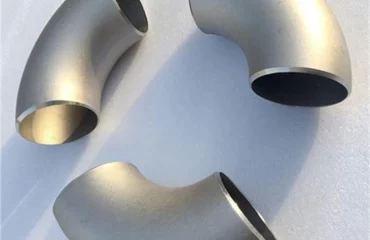
The Stainless Steel Pipe Elbow, manufactured in its precise configurations of $180^{\circ}$, $90^{\circ}$ (both $\text{SR}$ and $\text{LR}$), $45^{\circ}$, and the subtle $22.5^{\circ}$ angle, is unequivocally the most critically stressed and technically complex component in any modern pressure piping system, serving as the nexus where fluid dynamics meet mechanical load and material science is tested to its absolute limit. It is here, at the point of directional change, that the fluid flow transitions from laminar or stable turbulent motion into complex secondary flows, inducing intense localized pressure fluctuations, highly aggressive erosive and corrosive wear patterns, and significant stress concentration that fundamentally determines the operational integrity and longevity of the entire conduit. The strategic choice of Stainless Steel—a family of alloys defined by a minimum chromium content of $10.5\%$, ensuring the formation of a tenacious, self-healing chromium oxide passive layer—is not merely preference but an engineering imperative, essential for resisting the manifold threats of high-temperature oxidation, chloride-induced stress corrosion cracking (CSCC), and general crevice corrosion that would rapidly decimate less resistant materials in environments prevalent in chemical processing, nuclear power, and offshore oil and gas facilities, justifying the technical complexity and cost inherent in the product.
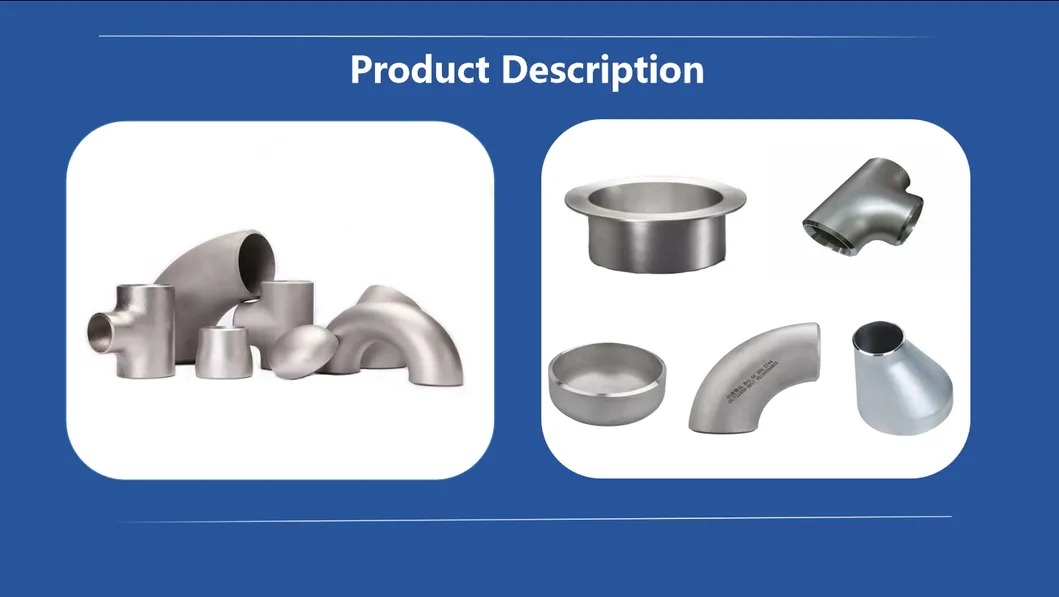
The most fundamental engineering decision encapsulated within these fittings is the differentiation between the Long Radius (LR) elbow, where the radius of curvature ($\text{R}$) is established as $1.5$ times the nominal pipe diameter ($\text{R} = 1.5\text{D}$), and the Short Radius (SR) elbow, constrained to $\text{R} = 1\text{D}$, a geometric divergence that profoundly impacts both the fluid dynamics and the mechanical stress profile of the piping system. The $\text{LR}$ elbow, by providing a gentler bend, minimizes the centrifugal forces acting on the flowing fluid, thereby reducing the localized pressure drop and head loss, leading to superior hydraulic efficiency and reduced pump energy consumption over the long-term, while simultaneously distributing the mechanical hoop stress and bending moment over a greater arc length, resulting in a substantially lower Stress Intensification Factor ($\text{SIF}$). Conversely, the $\text{SR}$ elbow, selected purely for spatial constraint where installation envelope is restricted, forces an abrupt change in fluid momentum, leading to higher velocity gradients, increased internal erosion/corrosion (E/C) rates, a much greater pressure loss, and a significantly elevated $\text{SIF}$, which mandates careful consideration during piping stress analysis ($\text{ASME B31.1 / B31.3}$) to ensure the adjacent straight pipe runs possess the necessary flexibility and support to manage the highly localized stresses imposed by the tighter curve, illustrating that the radius choice is a critical trade-off between installation footprint and long-term operational performance.
The complexity is further amplified by the wide array of potential Stainless Steel Grades utilized, ranging across the fundamental metallurgical families—Austenitic ($\text{304L}, \text{316L}, \text{904L}$), Ferritic, Duplex ($\text{S31803}, \text{S32750}$), and Martensitic—each meticulously selected to counteract specific failure mechanisms inherent to the intended service environment. The workhorse grades, such as $\text{316L}$ (low-carbon austenitic with molybdenum), are chosen for their superior resistance to pitting and crevice corrosion in chloride-containing media, owing to the molybdenum ($\text{Mo}$) content which enhances the stability of the passive film, a critical improvement over the base $\text{304L}$. For extremely aggressive environments, such as high-chloride seawater service or highly acidic media, Super Duplex grades like $\text{S32750}$ are mandated, combining the high strength of the ferritic phase with the corrosion resistance of the austenitic phase, evidenced by a high **Pitting Resistance Equivalent Number ($\text{PREN}$) ** typically exceeding $40$, thus offering unparalleled resistance to both general corrosion and chloride stress corrosion cracking, a failure mode particularly dangerous in hot, highly saline environments. . The manufacturing process, whether Mandrel forming for seamless elbows or Ball/Hot forming for the $180^{\circ}$ return bends, must be expertly controlled to preserve the delicate phase balance and precipitate-free grain boundaries required by these advanced alloys, especially the Duplex and Super Duplex grades, where improper thermal history can lead to the formation of brittle phases like $\sigma$ ($\text{sigma}$), catastrophically reducing toughness and corrosion resistance.
The manufacturing technique itself, predominantly Mandrel forming for the $45^{\circ}$ and $90^{\circ}$ elbows across all sizes—from the small $\text{DN15}$ seamless up to the large $\text{DN1200}$ welded—is a highly technical process involving the hot working of the straight pipe stock over a shaped mandrel. This process dictates the final material properties, as it involves significant plastic deformation, thinning the pipe wall on the outside radius and thickening it on the inside radius. The $\text{ASTM B16.9}$ and $\text{B16.28}$ dimensional standards provide crucial Wall Thickness Tolerances stating that the thickness must be greater than or equal to $0.875$ times the nominal wall thickness ($\ge 0.875 \times \text{WT}$) everywhere, a mandate intended to ensure that the material reduction on the critical extrados (outside bend) does not compromise the elbow’s pressure rating. The extreme plastic deformation inherent in forming the $180^{\circ}$ elbows often necessitates the alternative Ball forming/Hot forming process for the small sizes, or segmenting and welding for the larger sizes, techniques chosen to manage the immense localized material strain and prevent catastrophic rupture or excessive wrinkling during the drastic directional reversal, ensuring the final component maintains the pressure integrity demanded across the full schedule range from $\text{SCH5S}$ up to $\text{SCH160}$.
Upon completion of the forming process, the surface integrity is paramount, leading to the application of various finishing techniques such as Aid Pickling, Polishing, Shot Blasted, or Rolling Sand. Aid Pickling (acid treatment) is critical for stainless steel, as it chemically removes the tenacious, but often contaminated, surface scale and residual iron left from the hot forming or welding processes, thereby chemically regenerating the underlying chromium oxide passive layer, which is the alloy’s primary defense against corrosion. For sanitary or ultra-pure applications, Polishing is utilized to achieve an extremely low surface roughness ($\text{Ra}$ value), minimizing the crevices where bacteria or corrosive agents could collect, while Shot Blasting or $\text{Rolling Sand}$ treatments provide a uniform matte finish suitable for non-critical industrial applications. This careful control over the final surface condition is not merely aesthetic; it is a fundamental aspect of the component’s corrosion pharmacology, directly influencing its long-term resistance to localized attack in hostile environments.
The cruciality of these fittings in a high-pressure system is further underscored by the extreme precision required for their installation, governed by the precise dimensional controls listed in standards like ASTM B16.9 and B16.28. Tolerances on metrics such as Center to End (for $45^{\circ}/90^{\circ}$ elbows) and Center to center (for $180^{\circ}$ return bends) are incredibly tight, often specified within a few millimeters ($\pm 1.52 \text{ mm}$ to $\pm 9.65 \text{ mm}$) depending on the nominal diameter ($\text{DN15}$ to $\text{DN1200}$), ensuring that the complex, high-pressure piping spools can be assembled accurately with minimal internal misalignment, a factor vital for preventing turbulence-induced erosion/corrosion and ensuring the structural alignment necessary to withstand complex load cases (e.g., thermal expansion, seismic events, or slug flow). This exacting control over the final geometry, applicable equally to both seamless ($\text{DN15-DN600}$) and welded ($\text{DN15-DN1200}$) construction, confirms that the elbow is not simply a bent tube, but a precision-engineered pressure boundary component manufactured under a strict regime of multiple international standards—including GB/T 12459, $\text{SH 3408}$, and $\text{HG/T 21635}$—to ensure its complete technical compliance across the diverse spectrum of global project requirements.
Structured Technical Specification Data: Stainless Steel Pipe Elbows
| Category | Technical Specification | Dimensions & Ranges | Technical Significance / Application |
| Product Name | Stainless Steel Pipe Elbows | $180^{\circ}, 90^{\circ}, 45^{\circ}, 22.5^{\circ}$ angles. | Provides necessary directional change in pressure piping systems while maintaining structural integrity and corrosion resistance. |
| Radius Types | Long Radius (LR) | $\text{R} = 1.5 \times \text{D}$ | Preferred for lower fluid pressure drop and reduced Stress Intensification Factor ($\text{SIF}$). |
| Radius Types | Short Radius (SR) | $\text{R} = 1.0 \times \text{D}$ | Used where spatial constraints limit installation; results in higher pressure drop and $\text{SIF}$. |
| Dimensions (OD) | $\mathbf{4.0 \text{ mm} \text{ to } 1219 \text{ mm}}$ (Overall Range) | Seamless $\text{DN15-DN600}$; Welded $\text{DN15-DN1200}$. | Wide size range accommodates both small-bore instrument lines and large-bore transmission pipelines. |
| Dimensions (WT) | $\mathbf{0.5 \text{ mm} \text{ to } 40 \text{ mm}}$ (Overall Range) | Schedule Range:$\text{SCH5S}$ to $\text{SCH160}$. | Wall thickness is customized to meet specific pressure and temperature ratings per $\text{ASME B31}$ codes. |
| Core Process | Mandrel Forming | Used for $45^{\circ}/90^{\circ}$ elbows. | Hot working process ensuring material integrity but requiring strict control to manage wall thinning on the extrados. |
| $180^{\circ}$ Process | Ball Forming/Hot Forming | Used for $180^{\circ}$ return bends. | Specialized process required to handle extreme material deformation and prevent cracking/wrinkling. |
| Austenitic Grades | $\text{304L}, \text{316L}, \text{321H}, \text{317L}, \text{904L}$, etc. | Low-carbon $\text{L}$ grades resist sensitization and intergranular corrosion after welding. | Versatile corrosion resistance; $\text{316L}$ is standard for chloride service; $\text{H}$ grades for high-temperature creep. |
| Duplex Grades | $\text{S31803}$ ($\text{2205}$), $\text{S32750}$ ($\text{2507}$), etc. | $\text{PREN} \ge 35$. | High strength and superior resistance to Chloride Stress Corrosion Cracking ($\text{CSCC}$) and pitting. |
| Key Standard | ASTM B16.9 | Covers dimensions, tolerances, and markings for butt-welding fittings. | Ensures dimensional interchangeability and verifiable pressure containment capacity. |
| Tolerance (WT) | $\mathbf{\ge 0.875 \times \text{WT}}$ (Nominal) | $\text{ASTM B16.9}$ requirement. | Guarantees minimum strength remains after thinning on the outside radius during forming. |
| Surface Finish | Aid Pickling, Polishing, Shot Blasted | Chemical (Pickling) and Mechanical treatments. | Pickling restores the critical chromium oxide passive layer; Polishing reduces $\text{Ra}$ for sanitary/flow applications. |
The structural and fluid dynamic integrity of the Stainless Steel Pipe Elbow, meticulously crafted through specialized processes like Mandrel Forming and precisely toleranced to $\text{ASTM B16.9}$ standards, is perpetually threatened by a spectrum of corrosive and mechanical degradation mechanisms that define the ultimate boundary of its operational lifespan. The localized nature of the fluid velocity profile within the elbow—particularly severe in the Short Radius ($\text{R}=1\text{D}$) design—creates zones of highly turbulent flow that lead to increased localized wall shear stress, making the elbow uniquely susceptible to Erosion-Corrosion ($\text{E/C}$), where the protective chromium oxide passive layer is mechanically scoured away, leaving the underlying metal exposed to rapid electrochemical attack. This inherent vulnerability demands a material choice that can rapidly self-passivate and resist mechanical abrasion, often leading to the specification of higher-hardness grades or thick-walled $\text{SCH160}$ fittings to provide the necessary material allowance against predictable wear, a design consideration entirely driven by the fluid’s momentum vector changing rapidly within the curved geometry.
However, the more insidious threat to the Stainless Steel Elbow is not erosion but localized electrochemical attack, specifically Pitting and Crevice Corrosion, failures that initiate and propagate despite the material’s general corrosion resistance. Pitting, typically caused by the breakdown of the passive film in the presence of aggressive halide ions (primarily chlorides), often begins at microscopic surface defects or inclusions, a process that is significantly exacerbated within the elbow geometry. Crevice corrosion, which is a severe concern in the welded fittings ($\text{DN15-DN1200}$ size range) where inherent gaps exist at the seam, or under gaskets and deposits, is particularly dangerous as the restricted access of oxygen within the crevice leads to differential aeration cells, driving the internal $\text{pH}$ down to highly acidic levels ($\text{pH} \le 1$), overwhelming the capability of even high-performance $\text{316L}$ and $\text{317L}$ alloys and mandating the use of alloys with superior resistance, such as those with higher **Pitting Resistance Equivalent Number ($\text{PREN}$) ** values, often achieved through enhanced molybdenum and nitrogen content found in the **Super Austenitics ($\text{904L}, \text{S31254}$) ** and the Duplex families ($\text{S32750}$).
The critical importance of the weldability and the associated Post-Weld Heat Treatment (PWHT) or chemical passivation cannot be overstated, particularly for the wide range of Welded fittings produced up to $\text{DN1200}$ size. When standard austenitic grades like $\text{304}$ are heated within the critical temperature range of $450^{\circ}\text{C}$ to $850^{\circ}\text{C}$ (a process unavoidable during the $\text{SAW}$ fabrication of large fittings or high-heat Hot Forming), chromium carbides can precipitate along the grain boundaries, a phenomenon known as sensitization. This effectively depletes the surrounding grain boundary areas of chromium, destroying the local passive layer and making the material acutely susceptible to Intergranular Corrosion ($\text{IGC}$). The engineering solution is two-fold: first, specifying low-carbon **$\text{L}$ grades ($\text{304L}, \text{316L}$) ** or stabilized grades ($\text{321}, \text{347H}$) whose chemistry inherently resists this carbide precipitation; and second, the mandatory final step of Aid Pickling, which chemically removes any residual surface contaminants and, crucially, regenerates the full thickness of the chromium oxide passive layer, a non-negotiable step that restores the alloy’s intrinsic resistance to attack, ensuring the weld metal and the **Heat Affected Zone ($\text{HAZ}$) ** are as corrosion-resistant as the parent material.
The use of **Duplex ($\text{S31803}, \text{S32750}$) ** and Super Duplex grades is reserved for applications where the combined demands of high mechanical stress and extreme corrosivity make standard stainless steel inadequate, particularly in the presence of elevated temperatures and chlorides, conditions that induce Chloride Stress Corrosion Cracking ($\text{CSCC}$), a catastrophic failure mode characterized by brittle, intergranular cracking that occurs under a combination of tensile stress and corrosive environment. The Duplex microstructure, with its balanced two-phase mixture of $\text{ferrite}$ and $\text{austenite}$, offers superior resistance to this specific form of cracking, with the Super Duplex variants boasting incredible strength ($\text{SMYS}$ often $2 \times \text{316L}$) combined with $\text{PREN}$ values that withstand the harshest seawater or acidic processing conditions. Where even Super Duplex reaches its limit—such as in highly concentrated hot acids or high-nickel/high-molybdenum environments—the specification dictates a move to Nickel Alloys such as $\text{N06625}$ (Inconel) or $\text{N10276}$ (Hastelloy), components that trade the cost advantage of stainless steel for virtually complete immunity to $\text{CSCC}$ and exceptional performance against general corrosion in reducing media, representing the absolute apex of the material science hierarchy for these $90^{\circ}$ and $180^{\circ}$ pressure components. .
Finally, the mechanical integrity of the entire piping circuit hinges directly on the precise geometric conformance of the elbow to the ASTM B16.9 standards, specifically the tight tolerances governing Center to End for $90^{\circ}/45^{\circ}$ fittings and Center to Center/Back to Face for the $180^{\circ}$ return bends. These seemingly minor dimensional constraints ($\pm 1.52 \text{ mm}$ to $\pm 9.65 \text{ mm}$ for larger sizes) are essential for two primary reasons in high-performance piping. First, they ensure the accurate prediction of the piping system’s flexibility and stress distribution, critical for the ASME B31.3 stress analysis that must account for internal pressure, thermal expansion, and external loads; any dimensional error in the elbow position translates directly into unpredicted, potentially damaging stress on the adjacent welds and equipment nozzles. Second, for the large diameter welded fittings, precise alignment of the Bevel is necessary for the smooth, verifiable transition of the fluid and the complete penetration of the field girth weld, ensuring the entire pressure boundary operates as a single, structurally continuous entity, confirming that the technical merit of the elbow is as much about its physical geometry as it is about its high-grade stainless steel metallurgy.
You must be logged in to post a comment.