
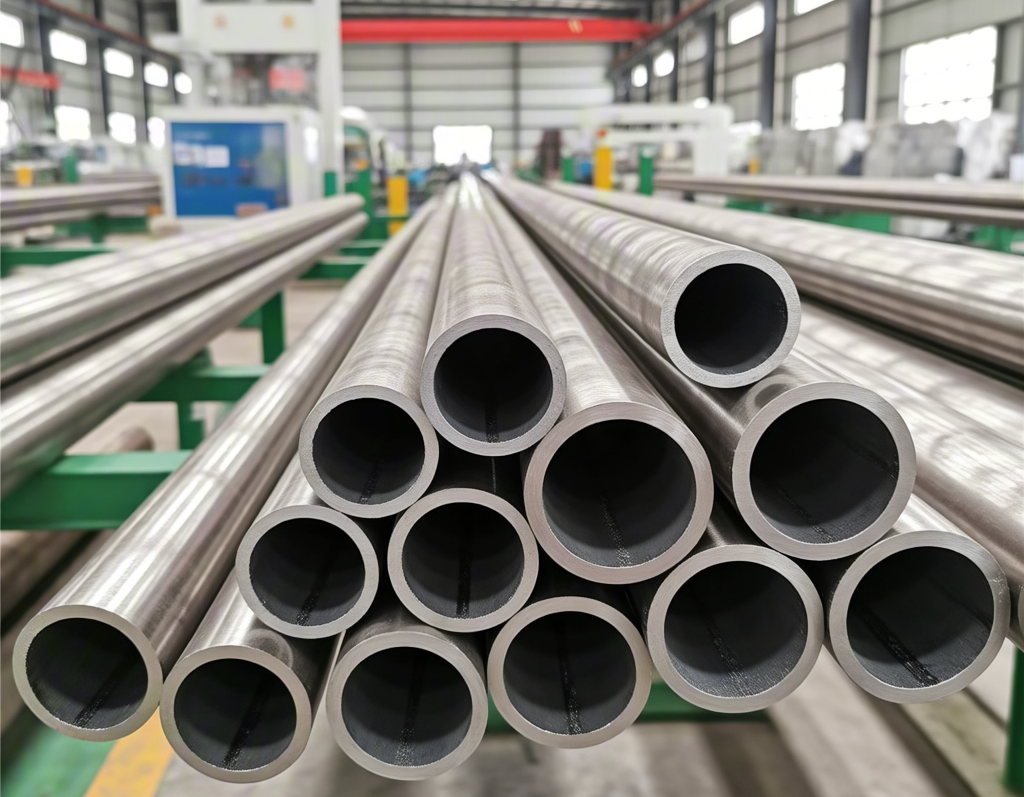
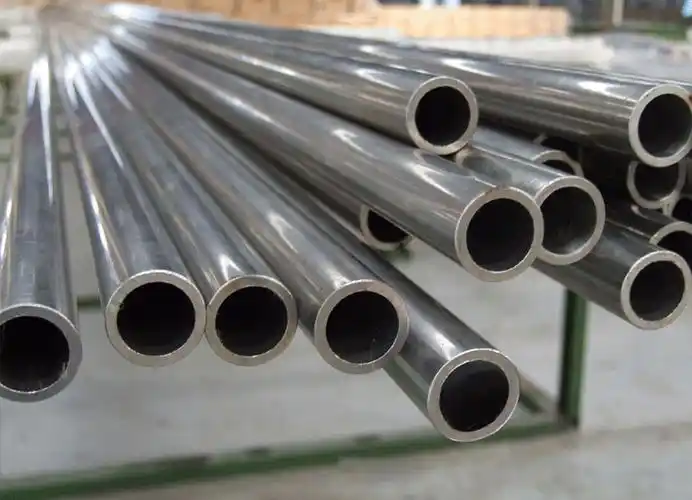
In the profound world of high-performance mechanical engineering, the GCr15 SAE52100 100Cr6 SUJ2 Bearing Steel Pipe stands as a testament to the pursuit of metallurgical perfection—a seamless conduit designed not just to transport fluid or support weight, but to endure the relentless, oscillating stresses of the modern industrial age. To understand this product is to understand the delicate equilibrium between carbon and chromium, a synergy that transforms a simple iron matrix into a fortress of wear resistance and dimensional stability. When we look at the seamless tube—whether it arrives in its hot-rolled raw state or the high-precision cold-drawn finish—we are looking at a material that has been purged of the microscopic inconsistencies that lead to catastrophic failure in high-speed rotations; our manufacturing process is a relentless campaign against non-metallic inclusions and gas porosity, ensuring that every millimeter of the pipe wall possesses the homogeneity required for the most demanding bearing applications.
The Philosophical Core: Chemical and Structural Integrity
The “heartbeat” of our GCr15 / 52100 steel is its 1% carbon content, which provides the raw hardness potential, and its 1.5% chromium addition, which acts as the master architect of the microstructure. Chromium’s role is dual-purpose: it enhances the hardenability of the steel, allowing for a deep, uniform quench even in thicker pipe walls, and it forms small, incredibly hard complex carbides that are distributed evenly throughout the matrix. This uniform distribution is the secret to the legendary “anti-friction” properties of this alloy. In our pipes, we control the phosphorus and sulfur levels to an extreme degree, recognizing that even a few parts per million of these impurities can create “soft spots” or initiation points for subsurface fatigue cracks. This is not just a pipe; it is a refined metallurgical ecosystem designed to thrive under the crushing Hertzian contact pressures of steel balls and rollers.
| Element | Carbon (C) | Chromium (Cr) | Manganese (Mn) | Silicon (Si) | Phosphorus (P) | Sulfur (S) |
| Standard (%) | 0.95 – 1.05 | 1.35 – 1.60 | 0.25 – 0.45 | 0.15 – 0.35 | ≤ 0.025 | ≤ 0.025 |
| Our Precision Control | 0.98 – 1.02 | 1.40 – 1.55 | 0.30 – 0.40 | 0.20 – 0.30 | ≤ 0.015 | ≤ 0.010 |
Thermal Evolution: From Soft Machinability to Diamond-Like Hardness
The journey of our bearing steel pipe is defined by its response to heat, a metamorphosis that dictates its industrial utility. In its supplied state, the pipe often undergoes a Spheroidizing Anneal, a slow, rhythmic cooling process that coaxes the hard carbides into a soft, globular form within a ferrite sea. This state, with a hardness below 248 HB, is essential for our clients who must machine these tubes into intricate bearing rings, internal combustion engine ferrules, or precision tools. However, the true power of the steel is “unlocked” during the quenching and tempering phase. By heating to 816°C and quenching in high-quality oil, the structure snaps into a rigid martensitic lattice, achieving a rock-solid 62–66 HRC. Our technical superiority lies in our ability to provide tubes that respond predictably to these treatments, avoiding the warping or cracking that plagues lower-grade seamless pipes during the intense thermal shock of quenching.
| Heat Treatment State | Temperature | Cooling Method | Resulting Hardness | Application Target |
| Annealing | 872°C (1600°F) | Furnace/Slow Cool | Max 248 HB | Machining & Cold Forming |
| Quenching | 816°C (1500°F) | Oil Quench | 62 – 66 HRC | Final Bearing Components |
| Low-Temp Temper | 150 – 170°C | Air Cool | 61 – 66 HRC | High-Speed Rolling Elements |
| High-Temp Temper | 650 – 700°C | Air Cool | 22 – 30 HRC | Shock-Resistant Tooling |
Mechanical Resilience in Extreme Operations
In the field, the performance of our GCr15 pipe is measured in millions of cycles. Whether it is a bearing in a high-load machine tool, a transmission component in an aircraft, or a mill roll in a heavy-duty factory, the pipe must resist Rolling Contact Fatigue (RCF). Our pipes are engineered to ensure that the yield strength—the point at which the metal begins to deform permanently—is exceptionally high. In the annealed state, we maintain high elongation and reduction of area to allow for complex fabrication, but once hardened, the pipe becomes an immovable object. The “science” of our product is found in the absence of “butterfly” inclusions—those tiny defects that under the stress of a rotating load would expand into cracks. By providing a cleaner, more stable steel, we extend the operational life of the final component by up to 30% compared to standard commercial-grade bearing steels.
| Mechanical Property | Annealed Condition | Quenched & Tempered (160°C) |
| Tensile Strength | ≥ 590 MPa | ~2100 MPa |
| Yield Strength | ≥ 390 MPa | ~1800 MPa |
| Elongation | ≥ 25% | < 1% |
| Impact Toughness | High | Moderate (Optimized for Wear) |
A Universal Solution for Precision Engineering
The versatility of our GCr15 SAE52100 100Cr6 SUJ2 pipes extends far beyond the traditional bearing ring. While they are the gold standard for the electric motor, tractor, and mining machinery industries, they have also carved a niche in the high-precision tool market. The automotive and aircraft industries utilize our pipes for their combination of high load capacity and high-speed stability. Because our pipes can be tempered to different hardness levels, they are frequently used for taps, punches, and measuring tools that require the same dimensional stability as a high-precision bearing. The stability of our steel ensures that even years after being manufactured into a gauge or a die, the metal will not “grow” or “shrink” due to retained austenite transformation, a common flaw in lesser steels that we eliminate through optimized thermal processing.
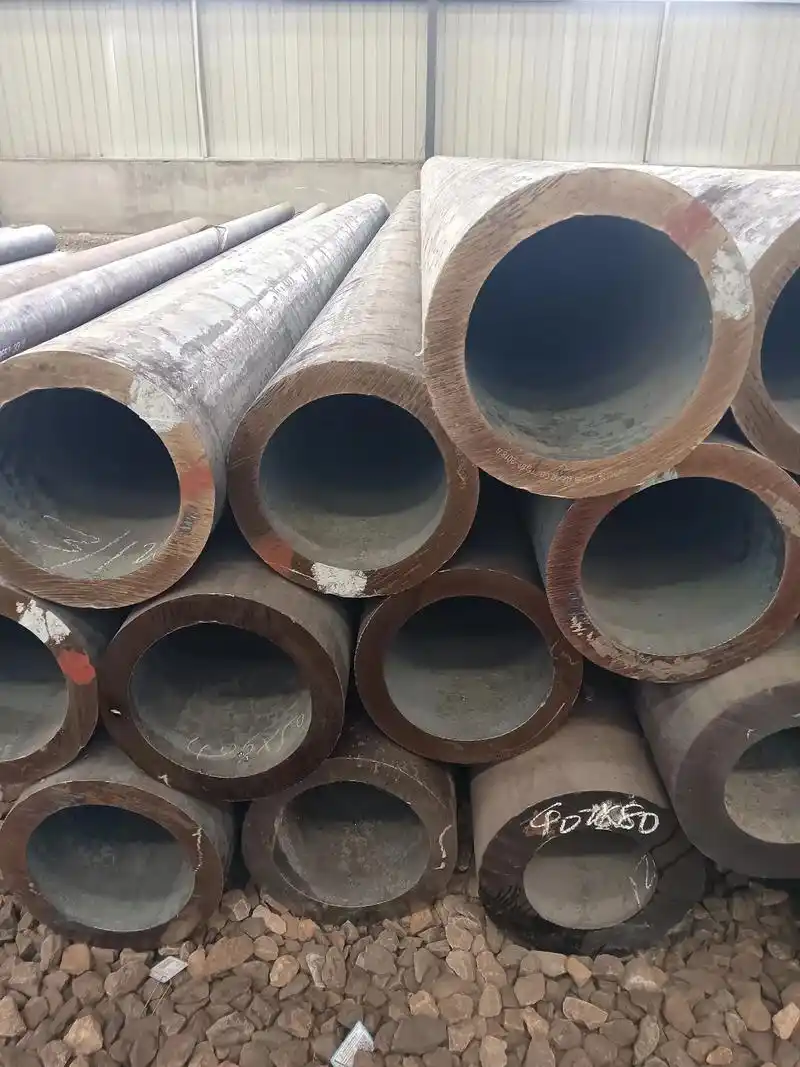
Our commitment is to provide the “spine” of your mechanical systems. By choosing our bearing steel pipes, you are investing in a product that has been scientifically honed to provide the lowest friction, the highest wear resistance, and the most reliable lifecycle in the industry. From the smallest steel ball to the largest rolling mill ferrule, our steel ensures that the world keeps moving, smoothly and without failure.
The metallurgical essence of GCr15, or its global twins SAE 52100, 100Cr6, and SUJ2, is not merely a collection of alloying elements but a profound exercise in carbon management and carbide morphology designed to survive the most unforgiving mechanical stresses in industrial physics. When we contemplate the bearing steel pipe, we are looking at a three-dimensional vessel of fatigue resistance, where the seamless nature of the tube—whether birthed through hot rolling, cold drawing, or cold rolling—must maintain a homogeneity that defies the inherent chaos of solidification. The primary challenge in producing high-grade GCr15 pipe lies in the elimination of macro-segregation and the meticulous control of non-metallic inclusions, particularly oxides and sulfides, which act as internal stress concentrators and the precursors to subsurface initiated fatigue. The chemical symphony of 1% carbon and 1.5% chromium creates a microstructure that, when properly heat-treated, manifests as a dense matrix of tempered martensite interspersed with fine, spheroidal carbides. This specific arrangement is what grants the material its legendary high hardness and wear resistance, yet the “pipe” form adds a layer of complexity; the wall thickness must be uniform to prevent eccentricities during high-speed rotation, and the residual stress state from the cold-working process must be delicately balanced by specialized annealing cycles to ensure dimensional stability.
The Atomic Architecture: Chemical Synergy
To understand the superiority of our SAE 52100 / GCr15 bearing steel pipe, one must delve into the specific role of each element within the iron-carbon-chromium ternary system, where the 1.35% to 1.60% chromium range is not arbitrary but a calculated threshold for hardenability and corrosion resistance of the martensitic matrix. Chromium dissolves into the austenite during heating, increasing the stability of the phase and shifting the Continuous Cooling Transformation (CCT) curves to the right, which allows for a slower, more uniform oil quench that minimizes the risk of quench cracking—a vital consideration for the hollow geometry of a pipe. The carbon content, strictly held between 0.95% and 1.05%, ensures that after the formation of primary carbides, there remains enough carbon in the solid solution to achieve a peak hardness of 62-66 HRC upon quenching. Manganese and silicon act as deoxidizers and solid-solution strengtheners, but their levels must be restrained to prevent the formation of coarse grain structures which would compromise the toughness of the bearing rings or rolling elements manufactured from the tube.
| Element | Carbon (C) | Chromium (Cr) | Manganese (Mn) | Silicon (Si) | Phosphorus (P) | Sulfur (S) |
| GCr15/52100 (%) | 0.95 – 1.05 | 1.35 – 1.60 | 0.25 – 0.45 | 0.15 – 0.35 | ≤ 0.025 | ≤ 0.025 |
Thermal Metamorphosis: The Art of Annealing and Quenching
The path from a raw seamless pipe to a high-performance bearing component is paved with thermal milestones, beginning with the spheroidizing anneal, a process that is as much about patience as it is about temperature. By heating the pipe slowly to 872°C (1600°F) and subjecting it to a controlled, sluggish cooling rate, we transform the lamellar pearlite—which is inherently brittle and difficult to machine—into a sea of globular carbides within a ferrite matrix, resulting in a maximum hardness of 248 HB. This soft, workable state is crucial for the subsequent machining of ferrules, balls, and rollers, ensuring that the tool wear is minimized and the surface integrity of the finished part is preserved. However, the true transformation occurs during the quenching phase; as the pipe is heated to 816°C (1500°F), the carbides partially dissolve, and the subsequent oil quench freezes the structure into a metastable martensite. The choice of oil as a quenching medium is critical for the pipe geometry, as it provides a cooling rate that is fast enough to bypass the pearlitic nose of the TTT curve but gentle enough to prevent the catastrophic distortion that water might cause.
| Process Stage | Temperature Range | Cooling Medium | Resulting Hardness |
| Spheroidizing Anneal | $860^{\circ}C – 880^{\circ}C$ | Slow Furnace Cool | $\le 248$ HB |
| Oil Quenching | $810^{\circ}C – 830^{\circ}C$ | Oil | $62 – 66$ HRC |
| Low Temp Temper | $150^{\circ}C – 170^{\circ}C$ | Air | $61 – 66$ HRC |
| High Temp Temper | $650^{\circ}C – 700^{\circ}C$ | Air | $22 – 30$ HRC |
The tempering stage is where the “personality” of the steel is finalized; for applications requiring maximum wear resistance, such as anti-friction bearings, a low-temperature temper at 150-170°C relieves the internal quenching stresses while maintaining the high hardness required to resist plastic deformation under massive Hertzian contact pressures. Conversely, for structural applications or tools like punches and taps that may face shock loading, a high-temperature temper creates a tougher, albeit softer, tempered troostite or sorbite structure. This versatility is why the GCr15 pipe is not just a bearing material but a fundamental building block for the automotive and aircraft industries, where it serves as everything from mill rolls to complex mechanical transmission components.
Mechanical Integrity and Loading Dynamics
The tensile requirements of 52100 bearing steel are often viewed as secondary to its hardness, yet in the context of a seamless pipe, the yield strength and elongation provide a vital window into the material’s ability to withstand the centrifugal forces and internal pressures of rotating machinery. In the annealed state, the pipe must exhibit enough ductility to survive cold-forming operations, but once heat-treated, its compressive strength becomes its most formidable asset. We must consider the “Rolling Contact Fatigue” (RCF) life, which is the primary failure mode for bearings; our pipes are engineered to ensure that the depth of maximum shear stress, which typically occurs a few hundred micrometers beneath the surface, is supported by a defect-free, high-strength microstructure. This prevents the formation of “Butterfly” cracks and White Etching Areas (WEA) that are common in lower-quality steels, ensuring that the bearing rings made from our pipes can sustain millions of cycles at high loads and high speeds.
| Condition | Tensile Strength (MPa) | Yield Strength (0.2% Offset) | Elongation (%) | Reduction of Area (%) |
| Annealed (Pipe) | $\ge 590$ | $\ge 390$ | $\ge 25$ | $\ge 45$ |
| Quenched & Tempered | $\ge 2000$ (Approx) | N/A (Brittle Zone) | $\le 1$ | N/A |
Industrial Synergy and Multi-Sector Applications
The application spectrum of our GCr15 / SAE 52100 pipes is a testament to their metallurgical robustness, spanning from the delicate ferrules of electric motorcycle motors to the heavy-duty mining machinery and rolling mills that anchor our global infrastructure. In the automotive sector, the demand for higher power density and reduced friction has pushed 52100 steel to its limits, requiring pipes with even tighter tolerances on inclusion content to facilitate the production of thinner, lighter, yet stronger bearing races. The aircraft industry, too, relies on the 100Cr6 variant for its predictability; when a bearing is rotating at 20,000 RPM in a jet engine component, there is no room for the structural inconsistency that a welded pipe might introduce, making our seamless cold-drawn tubes the only logical choice. Beyond the traditional bearing role, the high carbon and chromium content make this pipe an ideal precursor for precision tools—taps, punches, and measuring gauges—where dimensional stability over time is paramount. This stability is achieved through a sub-zero treatment (cryogenic cooling) following the quench, which ensures that any retained austenite is converted into martensite, preventing the minute volume expansions that could ruin a precision tool’s calibration years after its manufacture.
In conclusion, our GCr15 SAE52100 100Cr6 SUJ2 bearing steel pipe is a product of obsessive metallurgical control and an understanding that in the world of high-speed rotation, the difference between a successful machine and a catastrophic failure lies in the microscopic purity of the steel. We don’t just provide a pipe; we provide the raw material for the world’s most critical mechanical interfaces, ensuring that every steel ball, roller, and ferrule produced from our tubes is a monument to durability and precision.
You must be logged in to post a comment.